
The Supreme Court delivered a split verdict on the constitutional validity of Section 17A of the Prevention of Corruption Act, which mandates prior sanction for probing government servants in corruption cases. The case will now be placed before the Chief Justice for forming a larger bench.

The Centre told the bench that compensation to the beneficiaries was already paid and the land was acquired but subsequently, one person, on the strength of a power of attorney, filed a reference case.

The Supreme Court of India has issued pan-India guidelines on property demolition, emphasizing that no property should be demolished without a prior show cause notice and 15 days for the affected party to respond. The court strongly criticized 'bulldozer justice', stating that the Executive cannot demolish homes simply because individuals are accused of a crime. The verdict cites the importance of shelter as a fundamental right and highlights the unconstitutionality of demolishing houses based solely on accusations or convictions.
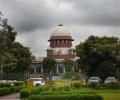
The Supreme Court of India has sought responses from the Centre and others on a petition challenging the blocking of the YouTube channel '4PM'. The petitioner, Sanjay Sharma, the Editor of the channel, alleges that the blocking order, issued by an intermediary based on an undisclosed direction from the Centre, violates his right to free speech and the public's right to information. The plea argues that the blocking was based on vague grounds of 'national security' and 'public order' without any opportunity to be heard. The court has issued notices to the Centre and others seeking their responses on the petition.

The Supreme Court of India has made public the asset details of its judges, including Chief Justice Sanjiv Khanna who has Rs 55.75 lakh in a fixed deposit, a three-bedroom DDA flat in south Delhi, and a four-bedroom apartment measuring 2,446 square feet in the Commonwealth Games Village. The court has also uploaded the complete process of appointments to the high courts and the Supreme Court on its website for public awareness.
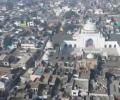
A court in Budaun will decide on December 24 whether to proceed with a hearing in the Jama Masjid Shamsi versus Neelkanth temple case. The dispute arose in 2022 when a Hindu group claimed the temple existed at the mosque site and sought permission to worship. The Supreme Court recently restrained all courts from entertaining and passing any orders on lawsuits seeking surveys of religious places under the Places of Worship (Special Provisions) Act, 1991. The Muslim side argues that the lower court should not proceed with the hearing as it cannot pass any orders, while the Hindu side maintains the Supreme Court order does not stop the hearing. The court will now decide whether to continue the proceedings.
The Mathura Shahi Masjid Eidgah Committee has approached the Supreme Court, requesting the court to prevent the central government from filing a response to a petition challenging the Places of Worship Act's constitutional validity. The committee accuses the BJP-led government of intentionally delaying its response. The court had previously issued a notice to the government in March 2021, but the government has yet to submit its reply despite numerous opportunities. The committee argues that the government's delay is intended to obstruct those opposing the challenge to the Places of Worship Act from filing their own responses. The petition also states that the pleas challenging the law's validity are scheduled for hearing on February 17, and closing the government's right to respond would serve justice. The Supreme Court previously issued a ruling in December 2022 that stopped courts from entertaining new lawsuits or issuing interim or final orders regarding the reclaiming of religious places, particularly mosques and dargahs. The ruling halted proceedings in 18 lawsuits filed by Hindu groups seeking surveys to confirm the original religious character of 10 mosques, including the Gyanvapi Masjid in Varanasi, the Shahi Idgah Masjid in Mathura, and the Shahi Jama Masjid in Sambhal. This decision was made in response to six petitions, including one filed by lawyer Ashwini Upadhyay, challenging various provisions of the Places of Worship Act. The 1991 law prohibits the conversion of places of worship and guarantees the preservation of their existing religious character as it stood on August 15, 1947. Notably, the dispute regarding the Ram Janmabhoomi-Babri Masjid in Ayodhya was excluded from this law. There are also several cross-petitions advocating for a strict enforcement of the 1991 law to uphold communal harmony and maintain the current status of mosques that Hindu groups seek to reclaim, claiming they were temples before being destroyed by invaders.
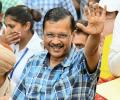
The apex court registry refused to accept the application, saying since Kejriwal was given liberty to move the trial court for regular bail, the plea is not maintainable.

The Supreme Court of India has extended its stay on a court-monitored survey of the Shahi Idgah Mosque complex in Mathura, which is located adjacent to the Krishna Janmabhoomi temple. The court deferred the hearing on a plea against the survey to April 1, while the interim order staying the survey will continue to operate. The Hindu side claims that the mosque complex holds signs of a temple that once existed at the site, while the Muslim side contends that the lawsuits filed by the Hindu litigants violate the Places of Worship (Special Provisions) Act of 1991.

A bench comprising Justices BR Gavai and KV Viswanathan warned the probe agency and remarked it had moved a "frivolous petition" only because one of the accused was a high-profile person.
While agreeing to hear his petition on September 27 last year, the top court stayed the proceeding against Murugan that was pending in a special court in Chennai.
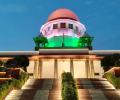
The Supreme Court of India has ruled that the offence of abetment of suicide should not be invoked mechanically against individuals, emphasizing that the provision should not be used to soothe the feelings of grieving families. The court stressed that the conduct of the accused and the deceased, their interactions, and conversations preceding the death should be examined practically and not divorced from real-life contexts. The judgment came after a plea challenging an order of the Madhya Pradesh High Court that refused to discharge a man from charges under Section 306 of the Indian Penal Code (IPC) related to a suicide case. The Supreme Court emphasized that to prove abetment of suicide, there must be evidence of active instigation or acts facilitating the suicide. In this case, the court found that the appellant's actions, including seeking repayment of a loan, did not constitute instigation to suicide.
The Supreme Court on Monday agreed to consider listing for urgent hearing the petitions challenging the constitutional validity of the Waqf (Amendment) Act, 2025.

A three-judge Supreme Court bench will hear petitions challenging the constitutional validity of the Waqf (Amendment) Act, 2025, on April 16. The petitions, including those by politicians and the All India Muslim Personal Law Board (AIMPLB) and Jamiat Ulama-i-Hind, were filed in the top court challenging the validity of the newly-enacted law. The Centre has filed a caveat in the apex court, seeking a hearing before any order is passed.

The apex court said when a particular structure is chosen all of a sudden for demolition and the rest of similarly situated structures in the same vicinity are not even being touched, "mala fide may loom large".

A bench comprising Justices BR Gavai and KV Viswanathan took note of the submissions of Solicitor General Tushar Mehta, representing the Gujarat government, and did not pass any interim status quo order in the meantime as sought by the counsel of the Muslim parties.
The apex court in May agreed to hear a plea filed by the father of one of the victims challenging the high court's order acquitting Koli in the case.
Commencing hearing on pleas challenging the constitutionality of the Places of Worship Act, 1991, the Supreme Court asked the Centre to reply to cross-pleas against or seeking implementation of statute.

The Supreme Court collegium headed by Chief Justice of India DY Chandrachud on Tuesday recommended to the Centre the names of Andhra Pradesh high court chief justice Prashant Kumar Mishra and senior advocate KV Viswanathan as judges of the apex court.

The Supreme Court of India has ordered the Union government to grant a permanent commission to a woman officer in the Army Dental Corps who was denied benefits given to similarly placed officers. The court ruled that the woman officer was wrongly excluded from consideration and that the principle of "what is sauce for the goose ought to be sauce for the gander" applies in this case. The court directed the government to implement the order within four weeks and to extend all consequential benefits, including seniority, promotion, and monetary benefits, to the officer.
The bench said the petitioner must know that the high court has already passed certain directions on the issue.

Citing the enduring legal principle that "bail is the rule and jail is the exception", a bench of Justices BR Gavai and KV Viswanathan granted bail to Prem Prakash, an aide of Jharkhand Chief Minister Hemant Soren, in a money laundering case related to an alleged land scam.

The SC asked why was there a need to make a public statement when a probe had already been ordered into the matter.

The appointments were announced by new Law Minister Arjun Ram Meghwal on Twitter.

The Supreme Court on Tuesday said it will lay down guidelines for all citizens and not for any particular community on the issue of demolition of properties.

Senior advocate Abhishek Singhvi, appearing for Sharad Pawar, said that on March 19, this court passed a reasoned order in which they (Ajit Pawar group) were asked to issue advertisements that the allocation of 'clock' symbol is sub judice before this court and they were permitted to use the same subject to final outcome of these proceedings.
Chief Justice DY Chandrachud, who is heading the five-judge constitution bench which is hearing the matter, also touched upon the notion that only the very highly educated or elitist want fewer children.
Coming down heavily on the Maharashtra government, the apex court castigated it saying the state has huge amount to "waste on freebies" but does not have money to compensate to a private party which lost land to it "illegally".
He furnished an undertaking before a bench of Justices Surya Kant and KV Viswanathan pursuant to a March 14 order by the apex court.

As Delhi grapples with water crisis amid the unrelenting summer heat, the Supreme Court on Monday ordered an emergent meeting of the Upper Yamuna River Board on June 5 to address the issue.
The bench gave liberty to Sharad Pawar to move the poll panel for allocation of the party symbol and directed the poll panel to allot it in one week of the application.

Days before the first vote for the Lok Sabha polls is cast, the Supreme Court on Thursday asked the rival Nationalist Congress Party factions led by party founder Sharad Pawar and Maharashtra Deputy Chief Minister Ajit Pawar to abide by its directions on the use of symbols, party names and disclaimers in publicity material for the elections.

It asked the Maharashtra deputy Chief Minister Ajit Pawar-led faction to issue a public notice in newspapers in English, Hindi and Marathi saying that the 'clock' symbol is sub-judice and its use is subject to adjudication.

The Supreme Court on Friday refused to stay the order of the Calcutta high court handing over the probe into incidents of violence during Ram Navami celebrations in West Bengal to the National Investigation Agency.

The Centre on Monday defended in the Supreme Court the third extension of service granted to Enforcement Directorate chief Sanjay Kumar Mishra, asserting it was due to a peer review being conducted by the Financial Action Task Force (FATF) this year and said he will retire this November.
 © 2026 Rediff.com - Advertise with us - Disclaimer - Privacy Policy - Sitemap - Feedback - About us - Terms of use - Grievances